
Hidden Fragrance Ingredients: How to Spot Them on Labels

This post was completely rewritten in 2026 to provide clearer, more actionable guidance on hidden fragrance ingredients in personal care, beauty, and household products.
I used to think “fragrance” was just a nice smell. Something pleasant, maybe a little luxury. It was so common that I never really questioned it.
Then I learned about hidden fragrance ingredients and how they were affecting my health. That changed how I looked at every label.
Suddenly, my question stopped being about picking a lotion that smelled good. It became this:
How do I avoid fragrance altogether when it seems to be everywhere??
The problem is that brands don’t make it obvious. Fragrance is often hidden behind tricky labeling and confusing terminology. Even products labeled “fragrance-free” or “unscented” can contain hidden fragrance ingredients.
I’ll show you exactly how to spot these ingredients so you can shop confidently without second-guessing every product.
Pin it for later! ⤵️

This post may contain affiliate links. As a Counter Brand Partner and Amazon Associate, I may earn a commission if you purchase through my links, at no extra cost to you. See my full disclosure for more information.
The BEST Way to Spot Hidden Fragrance Ingredients
It’s usually straightforward to find fragrance ingredients. Start by reading the ingredient list.
Not the marketing claims on the front of the package. The actual list of ingredients on the back.
When you’re reading ingredient lists, watch for words that indicate hidden fragrance:
The Obvious Ones:
- Fragrance
- Parfum
- Perfume
- Aroma
The Less Obvious Ones:
- “Made with essential oils” (without listing which specific oils)
- Fragrance oils
- Natural fragrance
- Synthetic fragrance
All of these mean the product may have hidden fragrance ingredients.
Look for: Products that list each essential oil by name, like “lavender (Lavandula angustifolia) oil” or “rose (Rosa damascena) oil.”
It shows the brand is disclosing what’s actually in the product. If it only says “made with essential oils” or “fragrance,” it may be hiding ingredients.
The “Unscented” vs. “Fragrance-Free” Confusion
This one catches people all the time. It tricked me for a long while.
Part of the problem is that these terms are not regulated, so they can be used even when fragrance chemicals are still present.
Unscented Products
Products labeled unscented can still contain “masking” fragrance. That means they use fragrance chemicals to hide or neutralize unpleasant smells from other ingredients in the formula. The product does not smell noticeable, but it still contains fragrance. The term “unscented” is often used as a greenwashing technique.
Fragrance-Free Products
The term “fragrance-free” should mean that no fragrance chemicals are in the product. Sometimes that’s true, but don’t rely on it at face value.
A study tested 174 top-selling moisturizers. The results were shocking: almost half (45%) of the products labeled “fragrance-free” actually contained fragrance chemicals.
What to Do
Don’t trust the front label. Turn the product over and read the ingredient list. If you see any of the fragrance-related words listed above, the product contains fragrance. No matter what the front of the package claims.
Where Fragrance Hides

You probably expect fragrance in perfume, cologne, or scented candles, but it shows up in way more products than you might think:
- Personal Care Products: Shampoo, conditioner, body wash, hand soap, lotion, moisturizer, deodorant, makeup, sunscreen, baby wipes, baby lotion
- Cleaning Products: Laundry detergent, fabric softener, dryer sheets, dish soap, all-purpose cleaners, bathroom cleaners
- Around Your Home: Air fresheners, plug-ins, scented candles, garbage bags, tissues, baby diapers, pet products
The list goes on. Fragrance really is everywhere.
Red Flags to Watch For
Beyond ingredient lists, look out for these signs that a product likely contains fragrance:
Marketing Language:
Words like:
- “Fresh scent”
- “Aromatherapy”
- “Signature scent”
- “Lightly scented”
- “Clean scent”
- “Made With Essential Oils”
Vague Ingredient Claims:
Products that list “botanical extracts” or “plant essences” without naming the specific plants. True transparency means listing every single ingredient by name.
My Personal Label-Reading Strategy

Here is exactly what I do when shopping:
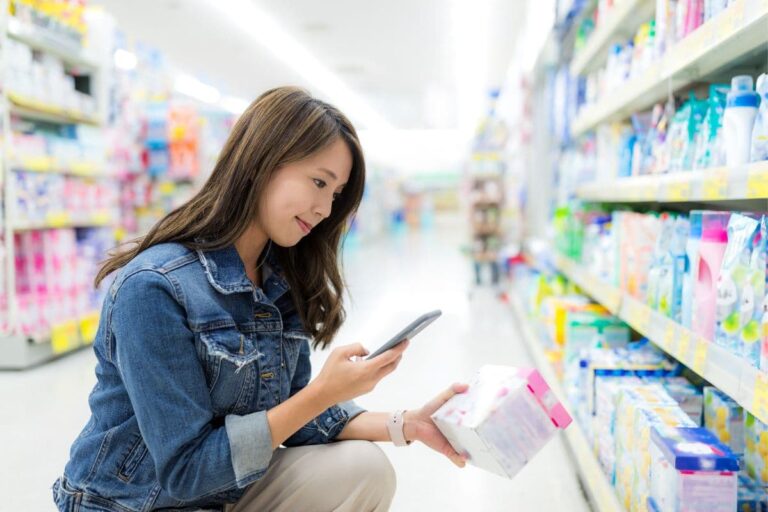
- Flip the product over immediately, skipping the front label.
- Scan the ingredient list for red flag ingredients. Look out for fragrance, parfum, perfume, aroma, fragrance oils, or vague phrases like “essential oils” or “botanical extracts.”
- If I see any of those words, I put it back, without a second thought.
I only trust the ingredient list for deciding if a product contains fragrance. Certifications like EWG verified or Made Safe are useful if you want to research harmful ingredients or products more broadly, but for fragrance, the words on the label are usually all you need.
This process takes only a few minutes and becomes second nature.
When You’re Ready to Start Swapping
You don’t have to replace everything at once. Start with one product. Choose something that will give you the biggest impact, like items you use regularly or that stay on your skin or in your air. This could be your skincare, laundry detergent, or hand soap.
Read the label. If it contains fragrance, replace it with a truly fragrance-free option (now or when you run out). Then move on to the next product.
Full disclosure, when I started this, I threw away everything that had fragrance in it. Talk about stress and nervous system dysregulation. I DO NOT suggest this method!
You see, I was recovering from a hysterectomy which I had to have due to a serious precancerous illness. And my oncologist told me environmental toxins caused my illness.
So it seemed extremely important to me to get rid of all fragranced products. However, knowing what I know now, I would not do that again. It was a gut-reaction based in fear, not power.
If you want a step-by-step guide to swapping safely, grab my free Clean Beauty Guide below.

Free Clean Beauty Guide
My free Clean Beauty for Mature Skin Guide combines ingredient education, simple skincare guidance, and trusted product recommendations to help you shop with confidence.
Want to Go Deeper? (The Research Behind This Post)
These are a few of the resources I’ve spent time with while falling down my own science rabbit holes (so you don’t have to).
- Fragrances in Cosmetics – U.S. Food & Drug Administration (2022)
- Consumer Preferences, Product Characteristics, and Potentially Allergenic Ingredients in Best-selling Moisturizers – JAMA Dermatology (2017)




Such a great post! I always get headaches from scents or even perfumes labeled fragrance free! I’m excited to try a better brand, thanks
I get headaches from products with fragrance, too! I’m so glad this post was helpful for you. Thanks for taking the time to comment!
What an amazing and educational article. Thank you so much for educating me. I really appreciate all the effort you put into writing this.
I’m so glad you found value in it! Thank you for taking the time to comment.
It is an eye-opener when you highlighted that we should avoid products with fragrances esp someone like me who’s so after with fragrances when buying stuff! Great article!
I’m so glad you found the article to be helpful and eye-opening! Definitely take a look at your products, it’s worth the effort. Thanks for taking the time to comment.
Wow! I think I’m gonna go and take a look at my toiletries.
Yes, definitely take a look! It’s so important. Thanks for taking the time to comment.
I no longer use most of the products mentioned in this post because of my many health issues. There’s so many toxins in everything today. We need to do what we can to avoid the poisons.
I completely agree that we need to do what we can to avoid these toxins! We can’t control everything, but we can control some things. I’m so happy to hear you’ve removed a lot of these toxins from your everyday products!
Such a well written one. Learnt so much today. Thank you!